We have compiled a list of manufacturers, distributors, product information, reference prices, and rankings for Zinc Treatment.
ipros is IPROS GMS IPROS One of the largest technical database sites in Japan that collects information on.

Zinc Treatment - List of Manufacturers, Suppliers, Companies and Products | IPROS GMS

Zinc Treatment Product List

1~21 item / All 21 items

Displayed results

Reoccurrence of rust: The "cost" of forgetting pre-treatment.

Realize before paying the price.

The recurrence of rust is the "price of forgetting the pre-treatment." There are cases where rust reappears a few months after painting. The cause lies hidden in the tiny, invisible dents on the surface. If the chemical treatment is incomplete, moisture remains in the micropores of the material. Even if coated with anti-corrosive paint, corrosion from within cannot be prevented. Many companies mistakenly believe that "it's okay because the paint film is thick." However, the anti-corrosive performance is determined by the "substrate."

  • others
  • Zinc Treatment

Added to bookmarks

Bookmarks list

Bookmark has been removed

Bookmarks list

You can't add any more bookmarks

By registering as a member, you can increase the number of bookmarks you can save and organize them with labels.

Free membership registration

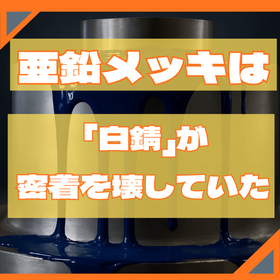
The zinc plating was compromised by "white rust."

Explanation of the causes and countermeasures for paint peeling due to white rust and surface deterioration of galvanized steel.

One of the causes of paint peeling on galvanized materials is white rust. When white rust occurs, it becomes difficult for the paint film to adhere. Even immediately after galvanizing, reaction products are present on the surface. If zinc phosphate treatment or light polishing is not performed, the paint film is likely to lift. A storage environment with high humidity is also dangerous. Specific measures for galvanized materials are necessary. We also provide detailed examples of improvements in publicly available documents.

  • others
  • Zinc Treatment

Added to bookmarks

Bookmarks list

Bookmark has been removed

Bookmarks list

You can't add any more bookmarks

By registering as a member, you can increase the number of bookmarks you can save and organize them with labels.

Free membership registration

Die casting was experiencing delamination due to "internal gas."

Explanation of the causes of paint peeling and blistering defects due to internal gas in die casting.

In die-cast materials, internal gas can cause paint peeling. Internal gas expands during heating. A baking treatment at 200 to 250°C can be effective in some cases. Measures that consider the interior of the material are necessary. We also provide detailed examples of improvements in publicly available documents.

  • others
  • Zinc Treatment

Added to bookmarks

Bookmarks list

Bookmark has been removed

Bookmarks list

You can't add any more bookmarks

By registering as a member, you can increase the number of bookmarks you can save and organize them with labels.

Free membership registration

Dissimilar metals were causing delamination due to "differential expansion."

Explanation of the causes and countermeasures for paint peeling due to thermal expansion differences between dissimilar metals.

In products that combine dissimilar metals, delamination can occur. The thermal expansion rates differ for each material. Distortion can occur during baking or in the usage environment, putting stress on the coating. It is important to consider structural design as well. We also provide detailed information on improvement cases in publicly available materials.

  • others
  • Zinc Treatment

Added to bookmarks

Bookmarks list

Bookmark has been removed

Bookmarks list

You can't add any more bookmarks

By registering as a member, you can increase the number of bookmarks you can save and organize them with labels.

Free membership registration

The culprit was the pinhole "white rust" from the galvanized coating.

White rust from zinc plating is the cause of pinholes. Management of storage conditions and surface treatment is essential.

Pinholes that occur in galvanized materials can sometimes be caused by gas generation due to surface reactions. Particularly when white rust is present, reactions can progress during baking, leading to gas formation inside the paint film. The zinc surface is prone to reacting with moisture, so materials that have been stored for a long time require extra caution. Additionally, insufficient zinc phosphate treatment can lead to reduced adhesion and the expansion of pinholes. As a countermeasure, it is important to combine light polishing with chemical treatment. Especially in environments with humidity over 60%, the progression of white rust accelerates, making proper storage management necessary. Detailed examples of improvements are also provided in publicly available materials.

  • others
  • Zinc Treatment

Added to bookmarks

Bookmarks list

Bookmark has been removed

Bookmarks list

You can't add any more bookmarks

By registering as a member, you can increase the number of bookmarks you can save and organize them with labels.

Free membership registration

Aluminum die-cast coating was a threat that jeopardized long-term warranty due to rust reoccurrence.

The cause of rust reoccurrence is the thinness of the chemical treatment film. Ensuring a thickness of 8-12 microns allows for 5 years of corrosion resistance.

Reoccurrence of rust is a phenomenon where rust occurs beneath the paint film 3 to 6 months after painting, causing the paint film to swell. This is particularly common in pressed and cast products, and if it leads to a return claim within the quality assurance period, the cost for replacement or repair amounts to 150,000 to 250,000 yen per case. Importance of conversion coating thickness: When managing the conversion coating at 5 microns, 15-20 percent rust reoccurrence occurs within 2 years. If the thickness is increased to 8-10 microns, the rust reoccurrence rate during the same period is reduced to below 2 percent. Crystal structure of phosphate treatment: The larger the crystals in the conversion treatment, the higher the corrosion resistance. By managing the crystal diameter between 5-15 microns, it is possible to clear 1000 hours in the salt spray test (JIS Z 2371). Combination effect with pretreatment: Optimizing the three stages of degreasing, oxide film removal, and conversion treatment improves corrosion resistance by more than three times compared to just conversion treatment alone. Similar measures are necessary even for stainless materials. Our company manages the conversion coating thickness within plus or minus 1 micron and offers a 5-year rust-free guarantee. We have also achieved no rust generation even after 1500 hours in the salt spray test.

  • others
  • Zinc Treatment

Added to bookmarks

Bookmarks list

Bookmark has been removed

Bookmarks list

You can't add any more bookmarks

By registering as a member, you can increase the number of bookmarks you can save and organize them with labels.

Free membership registration

Storage of materials before painting is suffering from condensation in summer.

The materials left before painting are rusting due to condensation. This explains the storage troubles unique to summer.

Are the materials before painting rusting just by being left out? The cause may be condensation during storage. It is said that condensation begins to occur with a temperature difference of 5 degrees. ────────────── ■Cause of Occurrence Condensation occurs on the surface of materials due to the temperature difference between air-conditioned indoor spaces and the outdoors or warehouses. Metals, in particular, have good thermal conductivity and quickly react to temperature differences, resulting in water droplets. ■Truth Even if there are no issues in the painting process, the quality can deteriorate solely due to condensation during storage. Special caution is needed during periods of significant temperature changes from night to morning. ■Improvement Measures Minimize the temperature difference in the storage area and protect the materials by sealing or covering them. Allow time for the materials to acclimate to the temperature before proceeding with pre-treatment after delivery. Please refer to the materials for summer storage management.

  • others
  • Zinc Treatment

Added to bookmarks

Bookmarks list

Bookmark has been removed

Bookmarks list

You can't add any more bookmarks

By registering as a member, you can increase the number of bookmarks you can save and organize them with labels.

Free membership registration

Iron and Parkerizing <Shako Man Frame> Metal Surface Treatment

By treating iron products with zinc phosphate, a zinc phosphate film is formed on the surface of the products, enhancing rust prevention effects. It is ideal as a primer for painting.

Parkerizing is synonymous with phosphate conversion coating treatment. Our company performs "zinc phosphate treatment" for Parkerizing. By applying Parkerizing treatment to iron, we enhance its rust resistance. The appearance color is gray-black. Due to the uneven surface coating, it has good paint adhesion and is also optimal as a paint base.

  • Processing Contract
  • Zinc Treatment

Added to bookmarks

Bookmarks list

Bookmark has been removed

Bookmarks list

You can't add any more bookmarks

By registering as a member, you can increase the number of bookmarks you can save and organize them with labels.

Free membership registration

Why does the paint peel off immediately? A review of the three pre-treatment processes to stop poor adhesion.

The peeling of paint is not just a problem with the paint itself, but is determined by the accumulation of degreasing, cleaning, and drying processes.

■Cause of Occurrence: Paint peeling is a defect that tends to be discovered during the assembly process at the customer's site. Even if the surface is clean at the time of delivery, it can peel off due to bolt tightening or friction during transport. The three processes to check are whether the degreasing has effectively removed oil, whether there are any residues left after cleaning, and whether moisture has been eliminated during drying. If any one of these processes fails, the adhesion strength will decrease. ■Truth: Peeling is not an issue that occurs at the moment of painting, but rather a defect that surfaces later due to inadequate pretreatment. Changing the paint or curing conditions will not resolve the issue if oil or moisture remains. The adhesion conditions differ for aluminum, iron, and zinc plating. ■Improvement Measures: Instead of only addressing the areas that have peeled, it is important to revert to the state before painting and manage records of oil content, surface roughness, chemical conversion coating, drying conditions, and storage time. Treating pretreatment as the entry point for quality assurance is crucial. Please utilize documentation that allows you to verify pretreatment, film thickness, and curing conditions.


  • others
  • Zinc Treatment

Added to bookmarks

Bookmarks list

Bookmark has been removed

Bookmarks list

You can't add any more bookmarks

By registering as a member, you can increase the number of bookmarks you can save and organize them with labels.

Free membership registration

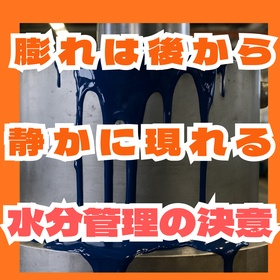
What is paint failure that swells a few months later? The importance of moisture management to prevent blisters.

The swelling of the paint film that is not visible at the time of shipment may be caused by moisture residue after pretreatment.

■Cause of Occurrence: Blisters are defects where the paint film swells like a balloon. Even if the product is good at the time of shipment, it may be discovered by the customer weeks or months later. The main causes are moisture retention after pretreatment, oil or rust on the surface of the material, and insufficient drying. Invisible residues foster defects beneath the paint film. ■Truth: No one notices the moment it occurs. Even if it passes visual inspection, if moisture or corrosion factors remain beneath the paint film, it will push the film up from the inside. This is a warning sign of adhesion failure, rust reoccurrence, and paint peeling. The risk for the entire lot is hidden behind a single blister. ■Improvement Measures: Check the drying time before painting, the overlap of parts, and any holes or edges where water may remain, as well as welds. Confirm during the process that no moisture remains on the parts, and also record cleaning, storage time, film thickness, and curing conditions. Please utilize materials that allow you to verify moisture retention, pretreatment, and drying conditions.

  • others
  • Zinc Treatment

Added to bookmarks

Bookmarks list

Bookmark has been removed

Bookmarks list

You can't add any more bookmarks

By registering as a member, you can increase the number of bookmarks you can save and organize them with labels.

Free membership registration

How to prevent the recurrence of rust? Methods to enhance anti-corrosion performance.

Pre-treatment is all about corrosion prevention measures.

Improvement methods for insufficient pre-treatment, chemical treatment, and anti-corrosion measures that cause rust reoccurrence after painting. Fine dirt can be the starting point for corrosion. Pre-treatment is important because painting alone cannot prevent it. Our company has published case study materials on improvements. Please take a look.

  • others
  • Zinc Treatment

Added to bookmarks

Bookmarks list

Bookmark has been removed

Bookmarks list

You can't add any more bookmarks

By registering as a member, you can increase the number of bookmarks you can save and organize them with labels.

Free membership registration

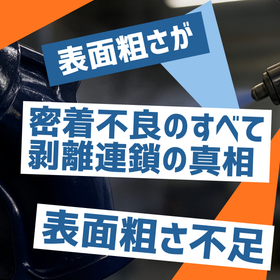
Surface roughness is the cause of all adhesion failures and the truth behind the delamination chain.

The truth about surface roughness that causes painting defects.

[Problem] Insufficient surface roughness significantly reduces coating adhesion. [Cause] Many judgments are made based on the appearance being clean, assuming there is no problem / If the surface is too smooth, the paint does not penetrate sufficiently / This has a particularly large impact on stainless steel and aluminum materials / It may manifest as coating peeling a few months later. [Management Standards] Surface roughness should be around Ra 1.0 to 2.0 micrometers. [Improvement Example] By managing surface roughness numerically, adhesion can be greatly improved.

  • others
  • Zinc Treatment

Added to bookmarks

Bookmarks list

Bookmark has been removed

Bookmarks list

You can't add any more bookmarks

By registering as a member, you can increase the number of bookmarks you can save and organize them with labels.

Free membership registration

Surface roughness is the root cause of all adhesion failures and the truth behind delamination chains.

The truth about surface roughness that causes painting defects.

【Issue】Insufficient surface roughness significantly reduces coating adhesion. 【Cause】Many judgments are made based on the appearance being clean, assuming there is no problem / If the surface is too smooth, the paint does not penetrate sufficiently / This has a particularly large impact on stainless steel and aluminum materials / It may manifest as coating peeling a few months later. 【Management Standard】Surface roughness should be around Ra 1.0 to 2.0 micrometers. 【Improvement Example】Significantly improved adhesion by numerically managing surface roughness.

  • others
  • Zinc Treatment

Added to bookmarks

Bookmarks list

Bookmark has been removed

Bookmarks list

You can't add any more bookmarks

By registering as a member, you can increase the number of bookmarks you can save and organize them with labels.

Free membership registration

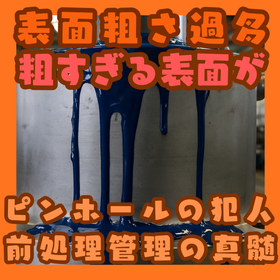
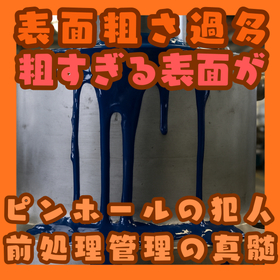
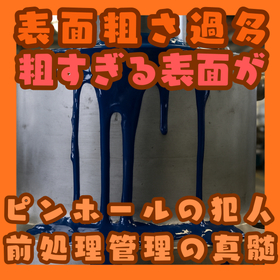
The overly rough surface was the culprit of the pinholes; the essence of pre-treatment management.

The balance of roughness affects quality.

[Problem] Excessively large surface roughness leads to poor painting. [Cause] If the blast pressure is too high, deep unevenness is formed, the paint does not spread evenly, air or solvent remains inside the coating, leading to pinholes and uneven film thickness. [Management Standards] Ensure a surface that is not too rough (approximately Ra 1.0 to 2.0 micrometers). [Improvement Example] By managing roughness to appropriate levels, the incidence of pinholes significantly decreases.

  • others
  • Zinc Treatment

Added to bookmarks

Bookmarks list

Bookmark has been removed

Bookmarks list

You can't add any more bookmarks

By registering as a member, you can increase the number of bookmarks you can save and organize them with labels.

Free membership registration

Insufficient drying was the culprit behind the pinholes, the essence of the cleaning process.

Improvement of quality through optimization of the drying process.

[Problem] Inadequate drying after washing leaves moisture in the coating, leading to pinhole formation. [Cause] Insufficient drying time / Low drying temperature / Residual moisture on the surface / Bubble formation inside the coating. [Management Standards] Ensuring appropriate drying temperature and time; complete drying is essential. [Improvement Example] Optimizing the drying process significantly reduces the incidence of pinholes.

  • others
  • Zinc Treatment

Added to bookmarks

Bookmarks list

Bookmark has been removed

Bookmarks list

You can't add any more bookmarks

By registering as a member, you can increase the number of bookmarks you can save and organize them with labels.

Free membership registration

Aluminum die-cast coating faced the risk of blistering and paint peeling.

The cause of blisters is the volatilization and gasification of oils. The key to prevention is the simultaneous removal of moisture and oils from the material.

Blistering is a defect where the paint film swells during the cooling stage after curing, creating voids between the paint film and the substrate. Once it occurs, the paint film peels off due to temperature changes in the usage environment, resulting in a high complaint rate after delivery, second only to paint peeling (industry average: 15-20 percent). The risk of double gasification: At curing temperatures around 150 degrees, residual oil vaporizes, and moisture absorbed by the substrate turns into steam. When these two gases are generated simultaneously, pressure increases beneath the paint film, and data shows that the blistering rate can reach 85 percent. Optimal temperature for the degreasing solution: Keeping the degreasing solution above 50 degrees improves oil removal efficiency by 60 percent. Additionally, moisture after chemical treatment can be removed by 95 percent with heating at 80 degrees for 3 minutes. Addressing stainless steel materials: Stainless steel retains more moisture on its surface than aluminum (1.5 times more), making it unsuitable under conventional conditions. It is essential to establish pre-treatment conditions specific to each material. Our company has established optimal degreasing and drying conditions for each material, achieving zero blistering.

  • others
  • Zinc Treatment

Added to bookmarks

Bookmarks list

Bookmark has been removed

Bookmarks list

You can't add any more bookmarks

By registering as a member, you can increase the number of bookmarks you can save and organize them with labels.

Free membership registration

How to prevent the recurrence of rust? Methods to enhance anti-corrosion performance.

Thorough surface preparation determines durability.

The recurrence of rust is caused by insufficient pre-treatment. It is important to thoroughly carry out degreasing and chemical treatment for improvement. Proper selection of paint also contributes to increased durability.

  • others
  • Zinc Treatment

Added to bookmarks

Bookmarks list

Bookmark has been removed

Bookmarks list

You can't add any more bookmarks

By registering as a member, you can increase the number of bookmarks you can save and organize them with labels.

Free membership registration

The overly rough surface was the culprit of the pinholes; the essence of pre-treatment management.

The balance of roughness affects quality.

【Problem】Excessively high surface roughness leads to poor painting quality. 【Cause】If the blast pressure is too high, deep irregularities are formed, causing the paint to not spread evenly, and air or solvent remains inside the coating, leading to pinholes and uneven film thickness. 【Management Standard】Ensure a surface that is not too rough (approximately Ra 1.0 to 2.0 micrometers). 【Improvement Example】By managing roughness to appropriate levels, the incidence of pinholes significantly decreases.

  • others
  • Zinc Treatment

Added to bookmarks

Bookmarks list

Bookmark has been removed

Bookmarks list

You can't add any more bookmarks

By registering as a member, you can increase the number of bookmarks you can save and organize them with labels.

Free membership registration

Insufficient surface treatment was the culprit of rust reoccurrence, a warning of decreased adhesion.

Optimization of the entire preprocessing is essential.

[Problem] Insufficient surface treatment leads to rust reoccurrence and paint film peeling during long-term use. [Cause] Insufficient thickness of chemical treatment film / Residual oil and contaminants on the surface / Decreased adhesion / Moisture intrusion from the environment. [Management Standards] Surface treatment is fundamental to painting; strictly manage the entire process of chemical treatment → cleaning → drying → painting. [Improvement Example] By properly implementing surface treatment and optimizing the entire pretreatment process, durability has significantly improved.

  • others
  • Zinc Treatment

Added to bookmarks

Bookmarks list

Bookmark has been removed

Bookmarks list

You can't add any more bookmarks

By registering as a member, you can increase the number of bookmarks you can save and organize them with labels.

Free membership registration

Surface roughness is the cause of all adhesion failures and the truth behind the delamination chain.

A thorough explanation of the truth about surface roughness that causes painting defects.

【Problem】 Insufficient surface roughness significantly reduces the adhesion of the coating film, leading to painting defects. 【Causes and Issues】 - Many judgments are made based on the assumption that "it looks nice, so there is no problem." - If the surface is too smooth, the paint does not penetrate sufficiently. - This is particularly impactful with stainless steel and aluminum materials. - It may manifest as peeling of the coating film a few months later. - It can be difficult to judge visually. 【Management Standards and Guidelines】 The recommended surface roughness is approximately Ra 1.0 to 2.0 micrometers. It can be challenging to assess roughness visually. It is important to manage numerical values. 【Improvement Examples and Effects】 By managing surface roughness numerically, adhesion is greatly improved. Actual improvement cases are detailed in publicly available materials. The enhancement of adhesion significantly improves the long-term durability of the coating film.

  • others
  • Zinc Treatment

Added to bookmarks

Bookmarks list

Bookmark has been removed

Bookmarks list

You can't add any more bookmarks

By registering as a member, you can increase the number of bookmarks you can save and organize them with labels.

Free membership registration

The overly rough surface was the culprit of the pinholes; the essence of pre-treatment management.

The importance of the balance of roughness in determining paint quality.

【Problem】 If the surface roughness is excessively high, it can lead to poor painting results. 【Causes and Issues】 - If the blast pressure is too high, deep irregularities are formed. - The paint does not spread evenly. - Air or solvents remain trapped within the paint film. - This leads to pinholes and uneven film thickness. - An outdated belief that "a mirror finish is good" influences this issue. 【Management Standards and Guidelines】 It is important to ensure a surface that is not too rough (approximately Ra 1.0 to 2.0 micrometers). Proper setting of blast pressure is essential. Regular surface inspections are necessary. 【Improvement Examples and Effects】 By managing the roughness to appropriate levels, the incidence of pinholes significantly decreases. Uneven film thickness is also improved, stabilizing quality.

  • others
  • Zinc Treatment

Added to bookmarks

Bookmarks list

Bookmark has been removed

Bookmarks list

You can't add any more bookmarks

By registering as a member, you can increase the number of bookmarks you can save and organize them with labels.

Free membership registration